

Physical red team ROI is the measurable value an organization gets from proactively testing its facilities against real intrusion tactics, weighed against the cost of the engagement itself. It’s not an abstract concept – it shows up in avoided breach costs, faster compliance audits, lower insurance premiums, and board-level confidence that physical risk is actually understood, not just assumed to be handled. At BFRT, we’ve sat across the table from CFOs who initially saw this as a discretionary spend, and the conversation almost always changes once the ROI case is framed in numbers their board already tracks.
Quick Glance: Physical Red Team ROI
Physical red team ROI is the measurable financial value an organization gains from testing its facilities against real intrusion tactics, weighed against the cost of the engagement. It shows up in four board-tracked areas: avoided breach costs (physical access is often the fastest path to a full network breach), faster and cheaper compliance audits, lower cyber-insurance premiums, and demonstrable risk visibility for the board. Because a single engagement costs a small fraction of the average data breach, the ROI case is not about proving a breach will happen, it is about proving the test costs far less than the exposure it protects against.
Why Boards Push Back on Physical Security Budgets
Boards approve digital security spend more readily than physical security spend, mostly because digital breach costs get reported in the news constantly while physical breaches rarely make headlines unless something catastrophic happens. This creates a perception gap: the ROI case feels less urgent than it actually is, right up until a board discovers that a competitor’s facility was compromised through a tailgating attack that led to a full network breach.
If you’ve already read our breakdown of the physical red team kill chain, you know physical access is often the fastest path to digital compromise – which means it needs to be argued using the same financial language your board uses for cybersecurity budget requests generally.
Argument 1: Cost of a Breach vs. Cost of the Test
The single strongest argument is a direct comparison: the cost of a single physical red team engagement against the average cost of a data breach in your industry. According to IBM’s Cost of a Data Breach research, the average global cost of a data breach reached $4.88 million in 2024, and breaches that originate from physical access often escalate faster because they bypass perimeter digital defenses entirely.
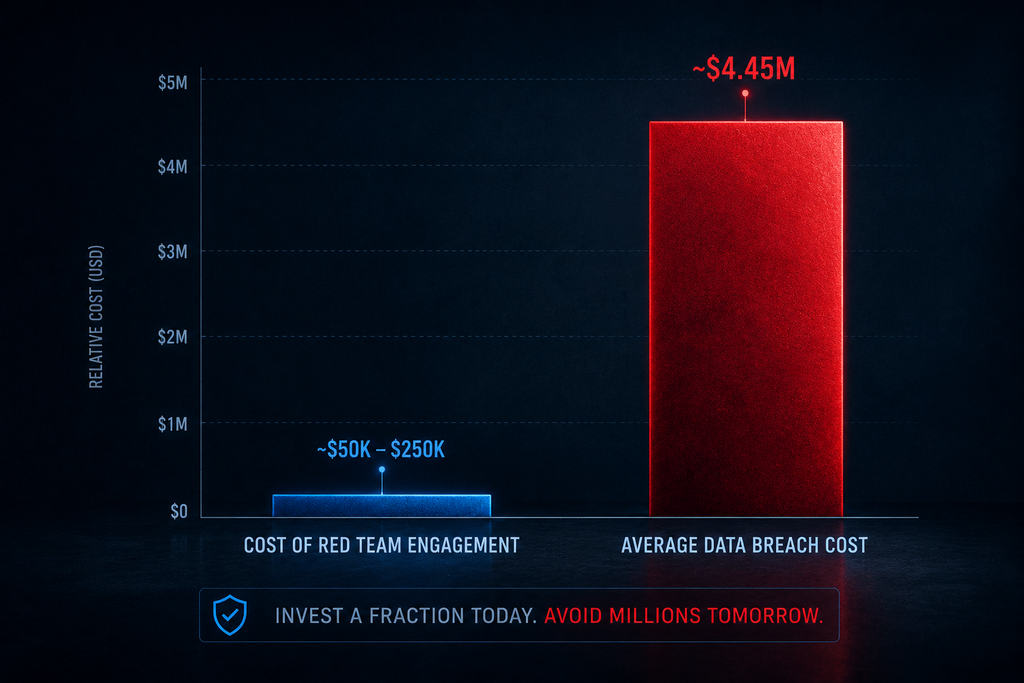
A physical red team engagement typically costs a small fraction of that figure – which means the ROI case isn’t about proving a breach will happen, it’s about proving the test costs far less than the exposure it’s protecting against.
Argument 2: Compliance and Audit Readiness
It extends directly into audit and compliance costs. Organizations pursuing or maintaining ISO 27001, SOC 2, or industry-specific certifications need documented evidence that physical controls are tested, not just implemented. Without this evidence, audits take longer, require more remediation cycles, and sometimes fail outright on physical control gaps that a red team engagement would have caught months earlier.
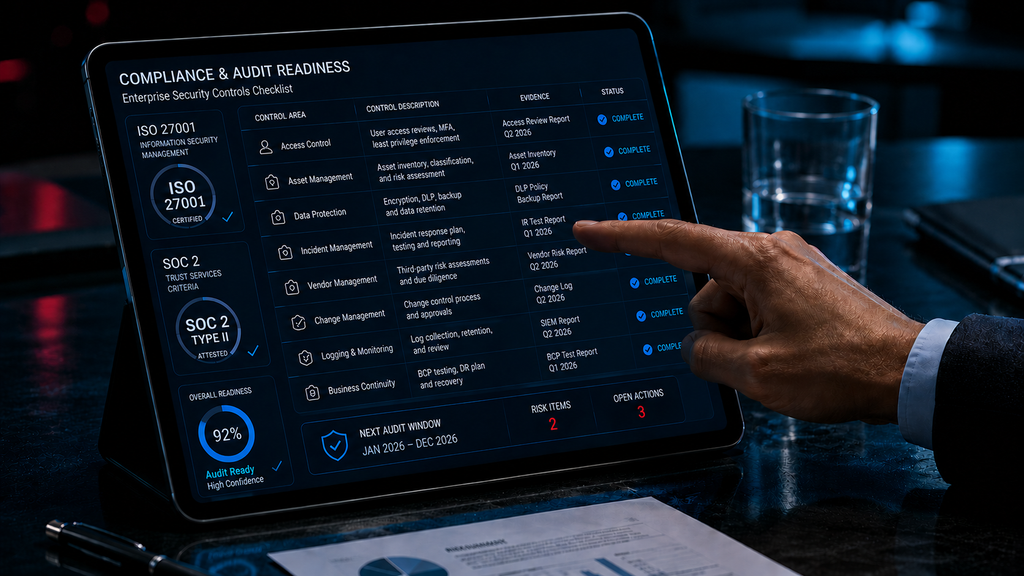
We mapped this connection in detail in our rules of engagement guide – every engagement we run produces documentation that maps directly to ISO/IEC 27001 Annex A physical security controls, which shortens audit prep time considerably for clients who test proactively.
Argument 3: Insurance and Liability Impact
Cyber insurance underwriters increasingly ask about physical security testing history when assessing premiums, particularly for organizations handling sensitive data or high-value assets. Demonstrating a documented physical red team engagement history can factor into premium negotiations, since insurers view proactive testing as a risk-reduction signal similar to how they treat digital penetration testing history.
This argument lands especially well with CFOs, since insurance premium impact is a line item they already track and can quantify year over year.
Argument 4: Executive and Board-Level Risk Visibility
One of the most underrated financial outcomes is simply this: most boards don’t actually know how exposed their facilities are until they see it demonstrated. A written policy stating “all visitors must be escorted” means little to a board until they see photographic evidence of a tester walking unescorted into a server room because that policy wasn’t enforced in practice.
During one engagement for a fintech client, our final readout session – showing exactly how we bypassed reception, cloned a badge, and reached the server floor – did more to shift board perception of physical risk than eighteen months of policy documentation had.
Argument 5: Competitive and Client Trust Signal
For organizations that sell into regulated industries – finance, healthcare, critical infrastructure – being able to demonstrate a tested physical security posture is increasingly a sales differentiator, not just an internal risk control. Enterprise clients and procurement teams are asking security questionnaire questions that cover physical controls more frequently than they did even two years ago.
Physical red team ROI in this context isn’t just about avoided losses – it’s about winning or retaining contracts where physical security posture is now part of vendor due diligence.
How to Present Physical Red Team ROI to Your Board
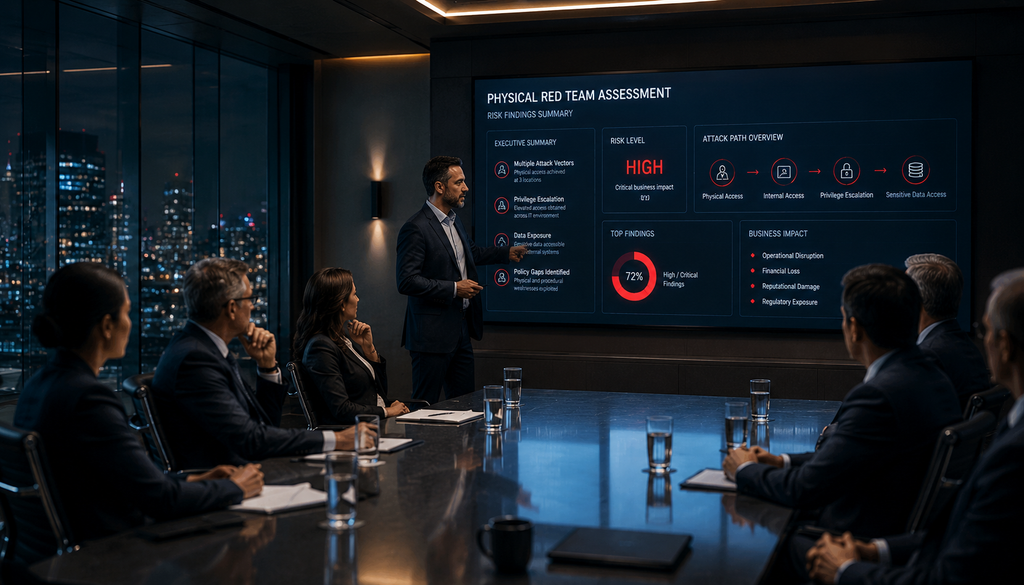
The strongest physical red team ROI presentations we’ve seen from clients follow a simple structure: lead with the breach-cost comparison (Argument 1), follow with the compliance timeline impact (Argument 2), and close with concrete findings from the actual engagement rather than hypothetical risk. Boards respond to specifics – “we found an unmonitored loading dock that led to network access in fourteen minutes” lands harder than “physical security testing reduces risk.”
We recommend building the board presentation around the executive summary from the final report, not the technical findings – a board doesn’t need to understand RFID relay attack mechanics, they need to understand what it cost the business in exposure and what it costs to fix.
What a Strong ROI Case Looks Like in Practice
A well-built physical red team ROI case typically includes three concrete elements: a specific breach-cost benchmark relevant to your industry, a compliance or audit timeline showing how proactive testing shortens certification cycles, and a summary of actual findings from your own facilities rather than generic industry statistics. Organizations that present all three together see faster budget approval than those relying on any single argument alone.
Physical red team ROI isn’t a marketing talking point – it’s a financial argument your board already knows how to evaluate, once it’s framed in the language of breach cost, compliance timelines, and insurance impact rather than abstract risk. If you’re preparing a budget case for your board and need real findings and figures from your own facilities to build it around, BFRT can help you build both the engagement and the presentation.
Book a Call with BFRT’s Redteam
Or connect with Jay Sinh, Head of Redteam Ops, on LinkedIn to discuss your board presentation directly.