

Last Updated: July 2026
Fintech Penetration Testing: A Complete Guide for Financial Technology Companies
Fintech penetration testing is the practice of simulating real-world cyberattacks against a fintech company’s digital environment—including payment platforms, mobile applications, APIs, cloud infrastructure, identity platforms, banking integrations, and internal systems—to identify exploitable vulnerabilities before attackers do. As fintech organisations continue to innovate through cloud-native architectures, Open Banking, embedded finance, digital wallets, AI-powered services, and third-party integrations, the attack surface has expanded significantly, increasing the risk of fraud, account takeover, data breaches, and operational disruption.
Modern fintech companies rely on interconnected technologies to process financial transactions, deliver digital banking services, facilitate payments, manage customer identities, and integrate with banks, payment processors, and external service providers. That connectivity is exactly what cybercriminals target—through API attacks, identity compromise, business logic abuse, cloud misconfigurations, payment fraud, and attacks against third-party integrations. Penetration testing helps fintech organisations proactively identify and remediate these weaknesses by simulating the techniques used by real-world attackers before they can impact customers, financial assets, or regulatory compliance.
This guide explains why penetration testing is essential for fintech companies, which systems should be tested, emerging cybersecurity threats, regulatory and compliance considerations, and best practices for improving cyber resilience.
Quick Glance: Fintech Penetration Testing
- Purpose: Identify exploitable vulnerabilities across fintech applications, payment platforms, APIs, cloud infrastructure, identity systems, and digital financial services before attackers can exploit them.
- Systems Tested: Payment platforms, mobile applications, banking APIs, Open Banking integrations, cloud environments, identity platforms, digital wallets, and internal networks.
- Primary Risks: Payment fraud, account takeover, API attacks, identity compromise, cloud misconfigurations, business logic flaws, ransomware, and third-party supply chain risks.
- Standards: Assessments typically align with the OWASP Top 10, OWASP API Security Top 10, MITRE ATT&CK, PCI DSS, DORA, ISO/IEC 27001, PSD2/Open Banking security requirements, and other applicable financial regulations.
- Who Needs It: Fintech companies, digital banks, payment providers, lending platforms, wealth management platforms, cryptocurrency businesses, Buy Now, Pay Later (BNPL) providers, and embedded finance providers.
- Recommended Frequency: At least annually, after major application releases, API changes, cloud migrations, new third-party integrations, or before launching new financial products.
- Typical Cost & Duration: Fintech penetration testing engagements typically start from $8,000 and take 1–4 weeks, depending on the number of applications, APIs, payment systems, cloud environments, identity platforms, and the overall scope of the assessment. Learn more about penetration testing pricing.
- Outcome: A prioritised report with validated vulnerabilities, business impact, proof of exploitation where appropriate, and actionable remediation guidance to strengthen security, protect customer data, and improve regulatory compliance.
Why Fintech Companies Are High-Value Targets
Financial technology organizations process some of the world’s most sensitive information.
Threat actors target fintech companies to gain access to:
- Payment data
- Customer accounts
- Personally identifiable information (PII)
- Authentication credentials
- Banking systems
- APIs
- Digital wallets
- Cryptocurrency assets
- Financial transactions
Attackers increasingly exploit identity systems, cloud misconfigurations, insecure APIs, weak authentication controls, and application vulnerabilities to achieve their objectives.
As fintech platforms continue adopting embedded finance, Open Banking, AI-powered services, and cloud-native architectures, the attack surface continues to expand.
Secure Your Fintech Platform Before Attackers Do
Cyber threats targeting fintech companies continue to evolve as organizations adopt cloud-native infrastructure, Open Banking, AI-powered services, and increasingly interconnected payment ecosystems.
Independent penetration testing helps uncover exploitable vulnerabilities across applications, APIs, cloud environments, identity systems, and payment platforms—giving your security team the insights needed to reduce risk before attackers can exploit weaknesses.
Whether you’re preparing for a PCI DSS assessment, launching a new fintech product, strengthening API security, or validating your cloud security posture, Bluefire Redteam delivers expert penetration testing tailored to the unique challenges of financial technology organizations.
Ready to strengthen your fintech security?
- Web Application Penetration Testing
- API Security Testing
- Cloud Penetration Testing
- Mobile Application Security Testing
- Red Team Assessments
- AI & LLM Security Testing
What Is Fintech Penetration Testing?
Fintech penetration testing is a controlled cybersecurity assessment that evaluates whether attackers could successfully compromise financial systems, applications, APIs, cloud environments, or supporting infrastructure.
Unlike automated vulnerability scans, penetration testing combines manual testing with offensive security techniques to determine whether vulnerabilities can be exploited under realistic conditions.
Typical assessments include:
- External network penetration testing
- Internal network penetration testing
- Web application testing
- Mobile application testing
- API penetration testing
- Cloud penetration testing
- Microsoft Entra ID assessments
- Active Directory security testing
- Authentication and authorization testing
The goal is to identify security weaknesses that present genuine business risk rather than simply generating a list of vulnerabilities.
Common Cybersecurity Risks Facing Fintech Companies
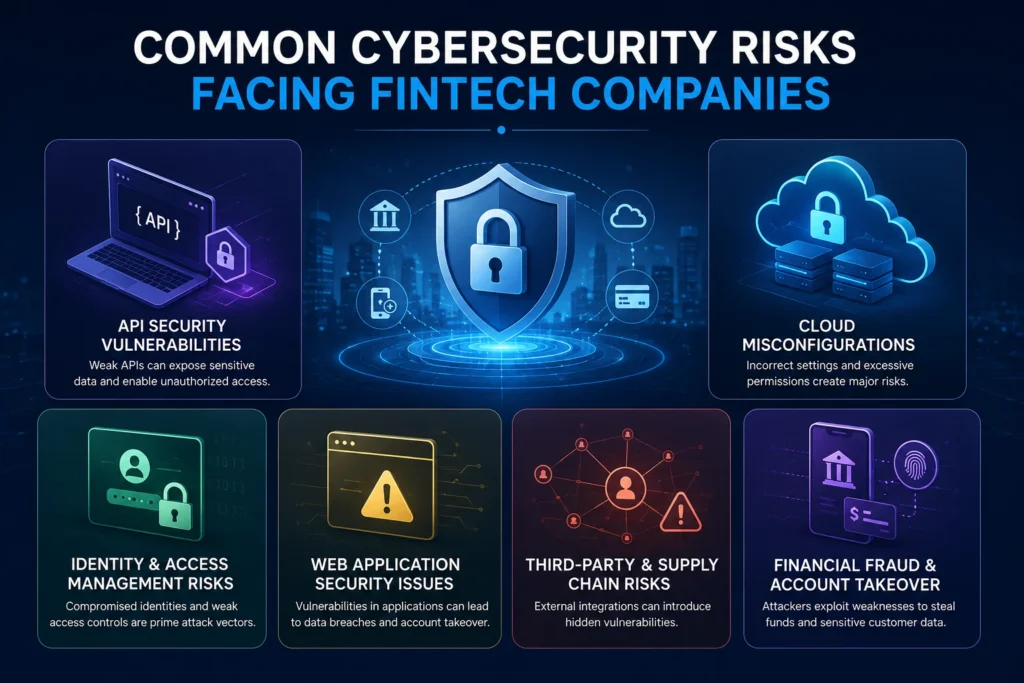
The fintech ecosystem evolves rapidly, creating new security challenges that require continuous assessment.
API Security Vulnerabilities
Modern fintech platforms rely heavily on APIs to process payments, integrate banking services, and connect with third-party providers.
Weak authentication, broken authorization, excessive data exposure, and insecure business logic remain some of the most common attack vectors.
Cloud Misconfigurations
Most fintech organizations operate cloud-first environments.
Misconfigured storage, excessive permissions, exposed services, and identity weaknesses can significantly increase the likelihood of compromise.
Identity & Access Management Risks
Compromised identities remain one of the leading causes of security incidents.
Weak privileged access controls, insufficient MFA enforcement, excessive permissions, and identity governance gaps create opportunities for attackers.
Web Application Security Issues
Customer portals, payment platforms, and internal applications frequently contain vulnerabilities including:
- Broken access control
- Injection attacks
- Authentication flaws
- Session management weaknesses
- Business logic vulnerabilities
Third-Party Supply Chain Risks
Fintech platforms commonly integrate with payment processors, banking APIs, identity providers, fraud detection services, and analytics platforms.
Every integration introduces additional security considerations.
Secure Your Fintech Platform Before Attackers Do
Cyber threats targeting fintech companies continue to evolve as organizations adopt cloud-native infrastructure, Open Banking, AI-powered services, and increasingly interconnected payment ecosystems.
Independent penetration testing helps uncover exploitable vulnerabilities across applications, APIs, cloud environments, identity systems, and payment platforms—giving your security team the insights needed to reduce risk before attackers can exploit weaknesses.
Whether you’re preparing for a PCI DSS assessment, launching a new fintech product, strengthening API security, or validating your cloud security posture, Bluefire Redteam delivers expert penetration testing tailored to the unique challenges of financial technology organizations.
Ready to strengthen your fintech security?
- Web Application Penetration Testing
- API Security Testing
- Cloud Penetration Testing
- Mobile Application Security Testing
- Red Team Assessments
- AI & LLM Security Testing
What Should Be Included in a Fintech Penetration Test?

An effective penetration test should reflect the organization’s technology stack and business risk.
Typical assessment areas include:
External Infrastructure
- Internet-facing services
- Firewalls
- VPN gateways
- Email security
- DNS
Internal Networks
- Active Directory
- Microsoft Entra ID
- Privileged accounts
- Lateral movement
- Network segmentation
Web Applications
- Customer portals
- Payment platforms
- Administrative dashboards
- Internal applications
Mobile Applications
- iOS applications
- Android applications
- Mobile API security
- Local data storage
- Authentication mechanisms
API Security Testing
API assessments should evaluate:
- Authentication
- Authorization
- Rate limiting
- Injection vulnerabilities
- Business logic flaws
- Sensitive data exposure
- Object-level authorization (BOLA/IDOR)
Cloud Security
Assess cloud platforms including:
- Microsoft Azure
- AWS
- Google Cloud Platform (GCP)
- Microsoft 365
Focus areas include identity, IAM, storage, networking, secrets management, and cloud-native services.
AI-Powered Financial Applications
Many fintech organizations now integrate AI into customer support, fraud detection, document processing, and financial decision-making.
Security assessments should consider:
- Prompt injection risks
- Sensitive data exposure
- AI model abuse
- Authorization bypass
- Integration security
Compliance & Regulatory Considerations
Many fintech organizations operate within multiple regulatory frameworks.
Depending on services provided and jurisdiction, penetration testing may support compliance initiatives related to:
- PCI DSS
- ISO/IEC 27001
- SOC 2
- DORA
- PSD2 and Open Banking security expectations
- NIS2 (where applicable)
- Internal cybersecurity programmes
Penetration testing provides technical evidence that organizations are proactively identifying and reducing cyber risk.
How Often Should Fintech Companies Perform Penetration Testing?
Penetration testing should be performed whenever significant changes introduce new security risks.
Common scenarios include:
- Annual security assessments
- Major application releases
- Cloud migrations
- API deployments
- Infrastructure redesigns
- Payment platform upgrades
- Regulatory audits
- Following significant security incidents
Organizations operating in highly regulated environments may require more frequent testing depending on contractual or regulatory obligations.
How to Choose a Fintech Penetration Testing Provider
Choosing the right provider requires more than comparing pricing.
Look for a provider with experience in:
- Financial services security
- API penetration testing
- Cloud security
- Mobile application security
- Identity security
- Red Team operations
- AI security testing
- Regulatory compliance
An experienced provider should deliver practical remediation guidance, executive reporting, and assessments tailored to the organization’s business objectives.
Emerging Threats in Fintech Security

The cybersecurity landscape for fintech organizations continues to evolve as attackers adapt their techniques to target cloud-native applications, digital payment platforms, APIs, and AI-powered financial services. Understanding these emerging threats helps organizations prioritize security testing and strengthen their overall resilience.
API Attacks
APIs are the foundation of modern fintech platforms, enabling payment processing, Open Banking integrations, account management, and third-party services. Attackers frequently target APIs to exploit broken authentication, authorization flaws, excessive data exposure, and business logic vulnerabilities.
Regular API penetration testing helps identify weaknesses before they can be exploited to access sensitive financial data or perform unauthorized transactions.
Identity-Based Attacks
Rather than exploiting software vulnerabilities, many attackers now target user identities.
Compromised credentials, weak multi-factor authentication (MFA), excessive permissions, and poorly managed privileged accounts remain some of the most common attack vectors in financial environments.
Identity security assessments help organizations validate authentication mechanisms, privileged access controls, and identity governance processes.
Cloud Security Risks
Most fintech companies operate on cloud-native infrastructure to support scalability and innovation. While cloud platforms provide significant advantages, misconfigured storage, overly permissive Identity and Access Management (IAM) policies, exposed services, and unsecured secrets continue to be leading causes of cloud security incidents.
Cloud penetration testing helps validate configurations and identify exploitable weaknesses before they become business risks.
Supply Chain & Third-Party Attacks
Fintech organizations increasingly depend on payment processors, banking APIs, identity providers, cloud services, and software vendors. Every external integration expands the attack surface and introduces additional security considerations.
Assessing third-party integrations and validating trust relationships should form part of a comprehensive security testing strategy.
AI-Driven Fraud & LLM Security Risks
Artificial intelligence is rapidly becoming part of modern financial services, powering customer support, fraud detection, document processing, and virtual assistants. As adoption grows, attackers are beginning to exploit AI systems through prompt injection, data leakage, model manipulation, and insecure integrations.
Organizations deploying AI-powered financial applications should include AI Red Teaming and Large Language Model (LLM) security testing as part of their broader cybersecurity programme.
Ransomware & Financial Extortion
Ransomware groups continue to target financial institutions due to the high value of their operations and the critical nature of their services. Modern ransomware campaigns often involve credential theft, privilege escalation, lateral movement, and data exfiltration before encryption occurs.
Regular penetration testing and Red Team exercises help organizations identify weaknesses that attackers could exploit during each stage of the attack lifecycle.
Building Resilience Against Modern Threats
Cyber threats facing fintech organizations will continue to evolve alongside new technologies and regulatory requirements. Rather than focusing on individual vulnerabilities, organizations should adopt a continuous security testing approach that combines penetration testing, Red Teaming, cloud security assessments, API testing, and identity security reviews.
By proactively identifying exploitable weaknesses, fintech companies can reduce cyber risk, improve resilience, and better protect the financial services their customers depend on.
Frequently Asked Questions - Fintech Penetration Testing
- What is fintech penetration testing?Fintech penetration testing is a controlled security assessment that evaluates financial applications, APIs, cloud environments, infrastructure, and identity systems to identify exploitable vulnerabilities before attackers do.
- Why is penetration testing important for fintech companies?Fintech companies process highly sensitive financial information and often operate under multiple regulatory requirements. Penetration testing helps identify weaknesses that could expose customer data, payment systems, or business-critical services.
- What systems should be tested?Organizations typically assess web applications, APIs, mobile applications, cloud infrastructure, identity platforms, external infrastructure, internal networks, and supporting services based on business risk.
- Does penetration testing support compliance?Yes. Penetration testing is widely used to validate technical security controls and support compliance initiatives including PCI DSS, ISO/IEC 27001, SOC 2, DORA, and other industry security frameworks.
- How often should fintech companies perform penetration testing?Most organizations perform penetration testing annually and after significant infrastructure, application, cloud, or API changes. Testing frequency should align with the organization's risk profile and compliance obligations.
Secure Your Fintech Platform Before Attackers Do
Cyber threats targeting the financial technology sector continue to evolve as organizations adopt cloud-native architectures, Open Banking, AI-powered services, and increasingly complex digital ecosystems.
Independent penetration testing provides valuable insight into how attackers could exploit vulnerabilities across applications, APIs, cloud infrastructure, identity systems, and supporting environments—allowing security teams to prioritize remediation before incidents occur.
Whether you’re preparing for compliance, launching a new financial product, or strengthening your overall security posture, Bluefire Redteam delivers expert penetration testing tailored to the unique risks facing modern fintech organizations.
Talk to Our Penetration Testing Experts