Most penetration testing reports fail at the one thing that matters most:
Helping organizations clearly understand real security risk and what to do next.
Some reports are overloaded with automated scanner output.
Others lack executive context entirely.
A high-quality penetration testing report should:
- clearly explain exploitable risk
- prioritize findings properly
- provide actionable remediation guidance
- communicate effectively to both technical and executive stakeholders
In this guide, we’ll show:
- what a professional pentest report looks like
- what sections matter most
- common mistakes in low-quality reports
- how modern penetration testing deliverables are structured in 2026
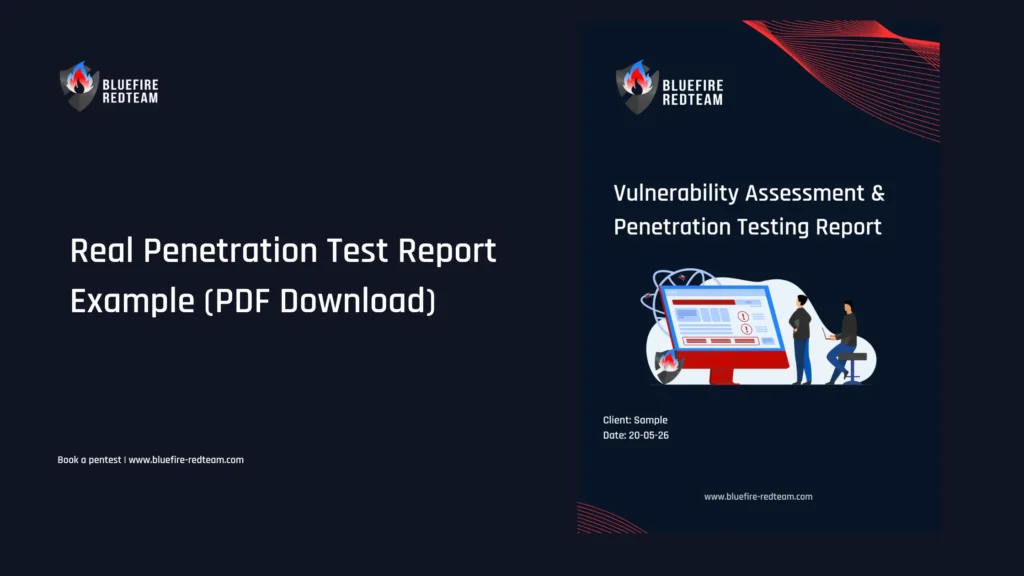
You can also download a realistic penetration testing report example PDF below.
Download the Full Pentest Report PDF
Get a realistic example of:
- executive summaries
- technical findings
- severity ratings
- remediation guidance
- attack narratives
What Is a Penetration Testing Report?
A penetration testing report documents:
- vulnerabilities discovered
- exploitation paths
- business impact
- remediation guidance
- testing methodology
- overall security posture
The report is ultimately the deliverable organizations use to:
- understand risk
- prioritize remediation
- support compliance
- communicate with leadership
- validate security investments
Unlike vulnerability scan exports, professional pentest reports focus on:
- exploitability
- attacker behavior
- realistic business impact
- remediation prioritization
Modern penetration testing reports are designed to help both technical teams and executives make informed security decisions.
What a Good Pentest Report Should Include
Executive Summary
A strong executive summary explains:
- overall security posture
- critical business risks
- attack feasibility
- remediation priorities
This section should be understandable by:
- executives
- compliance teams
- engineering leadership
—not just security specialists.
A weak pentest report often jumps straight into technical findings without helping leadership understand overall risk exposure.
Scope & Methodology
This section defines:
- assets tested
- attack surface
- testing approach
- assumptions
- limitations
Professional penetration testing reports commonly align with methodologies such as:
- OWASP
- NIST
- PTES
- MITRE ATT&CK
The methodology section is important because it clarifies:
- what was tested
- how deeply testing was performed
- whether exploitation occurred
- what risks may still remain outside scope
Technical Findings
This is the core of the penetration testing report.
Each finding should include:
- vulnerability description
- affected assets
- severity
- proof of exploitation
- business impact
- remediation guidance
High-quality pentest reports avoid:
- generic scanner output
- vague risk descriptions
- excessive low-value findings
Instead, findings should focus on:
- validated security weaknesses
- realistic attacker abuse paths
- operational impact
Attack Narratives
Modern penetration tests increasingly include:
- attack chains
- privilege escalation paths
- lateral movement scenarios
- realistic attacker workflows
This helps organizations understand:
not just individual vulnerabilities,
but how attackers combine them.
For example:
A medium-severity authentication flaw combined with weak authorization controls may ultimately lead to critical business compromise.
This context is often missing from low-quality assessments.
Remediation Guidance
A professional pentest report should prioritize:
- actionable remediation
- realistic fixes
- remediation priority
- business impact reduction
The best reports help engineering teams:
- resolve vulnerabilities efficiently
- reduce operational risk
- improve long-term security posture
—not simply generate long vulnerability lists.
Example Pentest Report Sections
Below are examples of the types of sections commonly included in professional penetration testing reports.
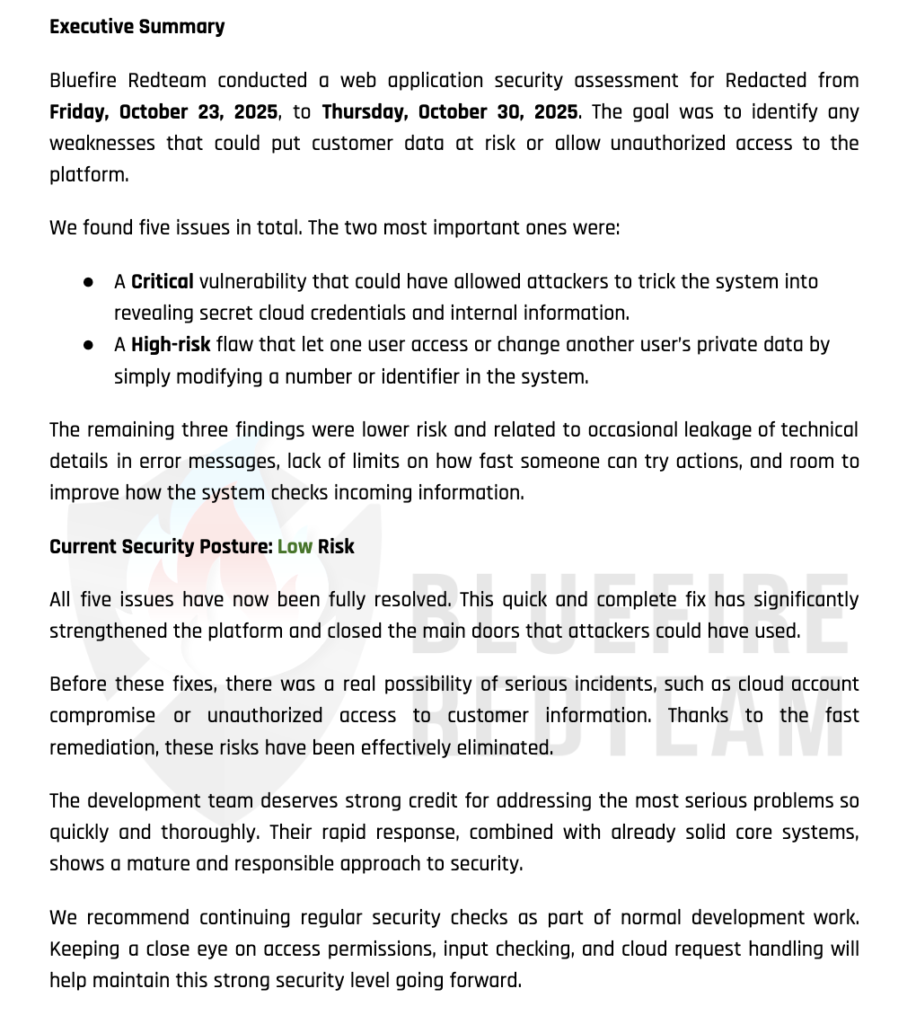
Executive Summary Example
This section provides:
- overall risk rating
- key findings
- business impact overview
- remediation priorities
Technical Finding Example
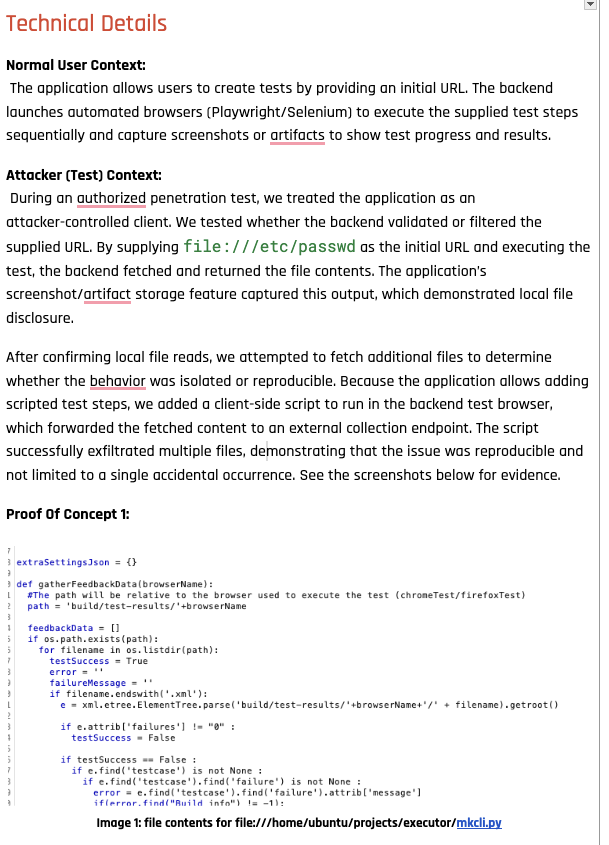
A technical finding typically includes:
- vulnerability explanation
- affected systems
- proof-of-concept evidence
- exploitation steps
- business impact
- remediation guidance
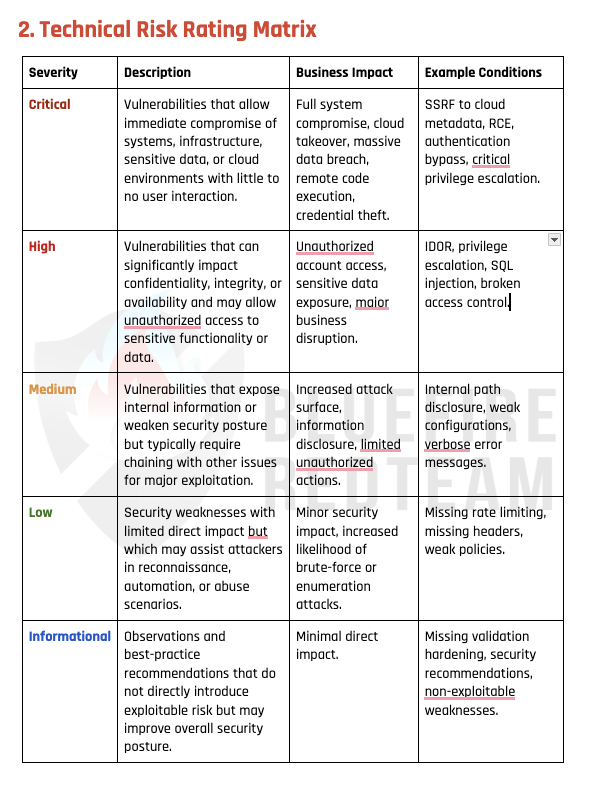
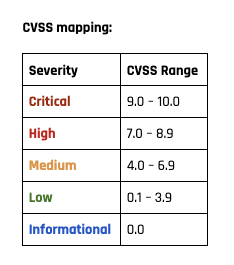
Severity Matrix Example
Professional reports usually include severity prioritization to help teams focus remediation efforts effectively.
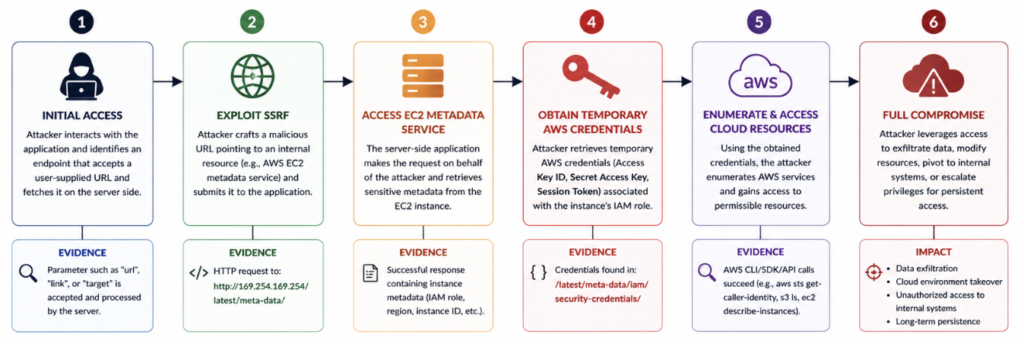
Attack Path Example
Modern adversary-driven pentests often include attack-chain visualization.
This demonstrates how multiple vulnerabilities may combine into:
- privilege escalation
- data exposure
- lateral movement
- operational compromise
Common Problems With Low-Quality Pentest Reports
Many low-cost penetration testing reports:
- rely heavily on automated scanner output
- contain little exploit validation
- lack business context
- overwhelm teams with low-priority findings
- provide weak remediation guidance
This creates:
- remediation fatigue
- false confidence
- poor prioritization
- compliance-only security
A professional penetration testing report should help organizations make better security decisions, not just generate vulnerability noise.
Example Severity Rating Structure
| Severity | Meaning |
|---|---|
| Critical | Immediate exploitation risk |
| High | Significant compromise potential |
| Medium | Exploitable under certain conditions |
| Low | Lower operational impact |
| Informational | Security observations |
Severity alone should not determine remediation priority.
Business context matters.
For example:
A medium-severity issue affecting authentication or privileged access may represent significantly higher operational risk than its CVSS score suggests.
How Modern Pentest Reporting Has Changed in 2026
Modern penetration testing reports increasingly include:
- cloud attack paths
- API authorization testing
- identity exposure analysis
- attack-chain mapping
- business-impact prioritization
- remediation collaboration
Organizations now expect reports that support:
- engineering remediation
- executive communication
- compliance evidence
- continuous security improvement
—not just static vulnerability lists.
The shift toward:
- cloud-native environments
- SaaS platforms
- API-first architectures
- identity-centric attacks
has fundamentally changed how modern penetration testing reports are structured.
Penetration Testing Report vs Vulnerability Scan Report
Organizations often confuse penetration testing reports with vulnerability assessment reports.
They are not the same.
| Vulnerability Scan | Penetration Test |
|---|---|
| Automated detection | Manual exploitation |
| Large finding volume | Validated risk |
| Limited context | Business impact analysis |
| Minimal attack simulation | Realistic attacker workflows |
| Compliance-oriented | Risk-oriented |
A professional penetration test validates:
whether vulnerabilities can actually be exploited in realistic conditions.
That distinction matters significantly when assessing operational risk.
What Buyers Should Look For in a Pentest Report
Before selecting a penetration testing provider, organizations should evaluate whether reports include:
- validated exploitation evidence
- clear remediation guidance
- business impact context
- attack narratives
- realistic prioritization
- executive summaries
- API and cloud security coverage
- actionable recommendations
The quality of the report often reflects the quality of the engagement itself.
Download the Full Penetration Test Report Example PDF
The downloadable report example includes:
- realistic findings
- executive summaries
- remediation examples
- severity prioritization
- attack narrative examples
Why Organizations Choose Bluefire Redteam
Many penetration testing providers focus primarily on compliance.
Bluefire Redteam focuses on identifying what real attackers would actually exploit.
Organizations work with Bluefire Redteam when they need:
- deep manual testing
- realistic attack simulation
- actionable remediation guidance
- senior-led expertise
- executive-ready reporting
Bluefire Redteam Engagements Include
- Manual adversary-driven testing
- Real-world exploitation validation
- Deep API and cloud security expertise
- Clear business-impact reporting
- Precise scope alignment
- Remediation-focused findings
- Collaborative communication throughout the engagement
Rather than generating excessive vulnerability noise, Bluefire Redteam prioritizes findings that meaningfully reduce operational risk.
Frequently Asked Questions - Pentest Report
- What is included in a penetration testing report?
Most professional pentest reports include:
- executive summaries
- technical findings
- proof of exploitation
- severity ratings
- remediation guidance
- attack narratives
- testing methodology
- What does a good pentest report look like?
A strong pentest report clearly explains:
- exploitable risk
- business impact
- remediation priority
- attacker behavior
It should help both executives and engineers understand security exposure.
- Are penetration testing reports required for compliance?
Many compliance frameworks such as:
- SOC 2
- PCI DSS
- ISO 27001
- HIPAA
require evidence of penetration testing or security assessments.
- What’s the difference between a vulnerability assessment and a penetration test?
A vulnerability assessment identifies potential weaknesses.
A penetration test validates whether vulnerabilities can actually be exploited in realistic attack scenarios.
- Why are some pentest reports low quality?
Low-quality reports often:
- rely heavily on automated tools
- lack exploit validation
- provide little business context
- contain excessive low-priority findings
High-quality reports focus on validated risk and actionable remediation.
Request a Professional Penetration Test
If your organization needs:
- manual penetration testing
- realistic attack simulation
- cloud or API security testing
- executive-ready reporting
- actionable remediation guidance
Bluefire Redteam can help.